

When shopping for a sex doll, many buyers focus on appearance, body shape, skin material, and price. But there is another important factor that product photos rarely explain: the design and long-term performance of the internal canal.
How tight does it feel? Does a smoother interior always feel better? Can the material lose its elasticity over time? Are removable inserts easier to clean? And what does a manufacturer really mean when it advertises a suction effect?
These questions deserve more than marketing claims. Understanding the underlying design, material properties, and maintenance requirements can help buyers make better-informed decisions.
This guide examines the available product specifications, manufacturer care instructions, user discussions, and relevant materials-testing methods. Where independent test data is unavailable, that limitation is stated clearly.
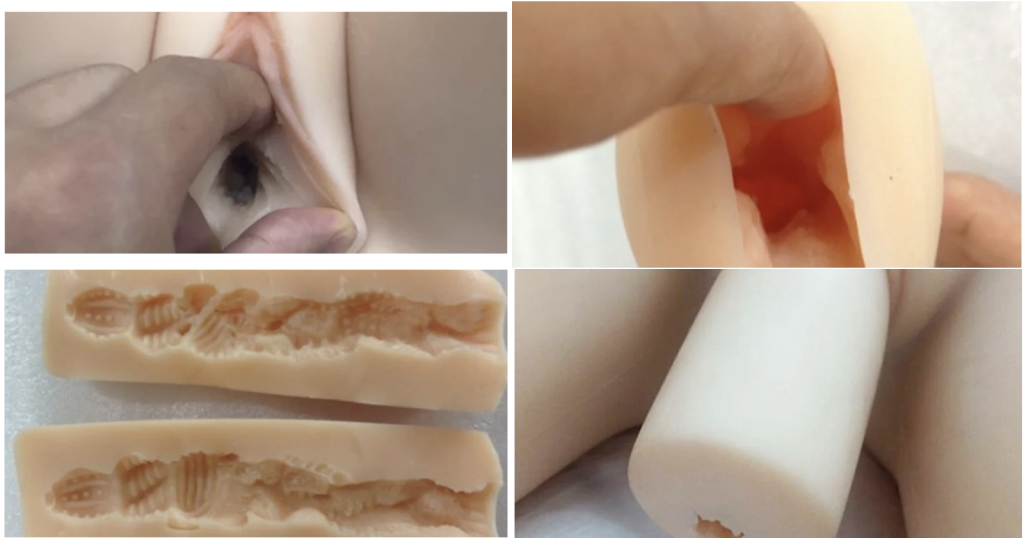
1. What Determines the Internal Fit?
Buyers often describe an internal canal as tight, loose, soft, or firm. These are subjective descriptions rather than standardized engineering measurements.
Several factors can influence the perceived fit.
Internal dimensions and geometry
The canal’s diameter, depth, cross-sectional shape, wall thickness, and internal texture can affect how the material deforms under pressure.
For example, a narrower canal may create more resistance, but that does not automatically make it a better design. Excessive resistance can increase stress on the material and make maintenance more difficult.
A wider canal may reduce resistance and mechanical strain, but the actual result depends on the material, the user’s needs, and the overall construction.
One retailer’s published guide to vaginal opening width describes standard options of approximately 2 cm and wider options of approximately 3 cm or more for certain products.
These figures are retailer-reported examples, not universal industry standards. Dimensions and customization options vary by model and manufacturer. Buyers should request specifications for the exact product they are considering.
Material softness and elastic recovery
TPE and silicone are both used in adult doll manufacturing, but their formulations and mechanical properties can differ significantly.
Three concepts should not be confused:
- Softness: How easily a material deforms under an applied force.
- Elastic recovery: How well it returns toward its original shape after the force is removed.
- Durability: How well it resists damage and performance changes over repeated use and maintenance.
A material can feel soft without having excellent long-term recovery. Likewise, a firmer material is not necessarily more durable.
The label “TPE” or “silicone” alone does not provide enough information to predict the performance of a particular internal canal.
Internal texture
Some products have pronounced molded textures, while others have relatively smooth interiors.
Texture changes the contact geometry and friction conditions. However, more texture does not automatically mean better performance. Complex surfaces may also be harder to clean and dry thoroughly.
What buyers should ask: Can the manufacturer provide a cross-sectional diagram, internal dimensions, material specifications, or measurements of elastic recovery?
These details are more useful than relying on a single adjective such as “ultra-tight.”
2. Does a Sex Doll Get Looser Over Time?
The honest answer is that it depends on the specific product, material formulation, construction, and conditions of use. There is no reliable universal figure for how many uses it takes before an internal canal changes shape.
Flexible materials can experience temporary deformation, permanent deformation, surface wear, or other changes over time. The degree of change depends on several factors.
Repeated deformation
When a flexible material is repeatedly stretched or compressed, it may gradually change its dimensions or recovery behavior.
This does not mean every doll will become noticeably looser. It means that long-term performance should be evaluated using measurements rather than assumptions.
Localized stress and material thickness
Thin areas, narrow openings, and regions subjected to repeated stretching may experience different stresses from thicker sections.
A small tear or localized deformation can also affect performance without the entire canal changing shape uniformly.
Temperature, storage, and cleaning products
Heat exposure, unsuitable chemicals, and improper storage can affect some flexible materials. Buyers should follow the care instructions for their exact model rather than assume that every cleaning product is safe for every material.
What does materials testing tell us?
ASTM International publishes ASTM D395, Standard Test Methods for Rubber Property—Compression Set. The standard measures the ability of rubber compounds to retain elastic properties after prolonged compression.
It provides a useful reference for understanding permanent deformation, but there is an important limitation: ASTM D395 is not a direct test of an adult doll’s internal canal under real-world use conditions.
A meaningful product-specific durability study would need to identify the material, sample count, test conditions, deformation cycle, recovery period, and measurement method. Testing repeated stretching and cleaning may also be necessary.
At present, we do not have sufficient independent, comparable data to state that a particular doll will become a certain percentage looser after a specified number of uses.
That is a question manufacturers should answer with model-specific test results.
3. TPE vs. Silicone: Which Material Performs Better?
There is no universal winner. Performance depends on the formulation, manufacturing process, geometry, and intended maintenance routine.
| Factor | What buyers should investigate |
|---|---|
| Softness | Is there a documented hardness measurement, or only a subjective description? |
| Elastic recovery | Has recovery after repeated deformation been measured? |
| Surface condition | Does the manufacturer provide care guidance to maintain the surface? |
| Tear resistance | Are there relevant material or product-level test results? |
| Chemical compatibility | Which lubricants and cleaners are approved for the specific material? |
| Repairability | Can damaged components be replaced or repaired? |
These questions are more informative than assuming that every TPE product behaves alike or that every silicone product is automatically more durable.
A manufacturer’s technical specification or test report is preferable to a generic material comparison.
4. Fixed Canals vs. Removable Inserts
The construction of the internal component can be just as important as the material itself.
Fixed internal canals
A fixed design is integrated into the doll’s body. Buyers should consider whether the internal surface can be reached and cleaned thoroughly, how residual moisture is removed, and how the manufacturer recommends drying the interior.
A complex internal shape may require more careful maintenance.
Removable inserts
A removable insert can make access and cleaning more convenient, depending on its design. It may also allow the internal component to be replaced without replacing the entire doll.
However, removable does not automatically mean better. Buyers should check how securely the insert fits, whether it is compatible with the exact model, how it is retained, and whether replacement components remain available.
A useful real-world discussion appears in The Doll Forum’s thread about removable inserts. Users discuss questions such as ease of removal, cleaning, and keeping an insert properly positioned.
This is useful as a source of buyer concerns, but it is not a controlled comparison or proof that one brand is universally superior.
5. What Does “Suction” Actually Mean?
Some product descriptions use terms such as suction, grip, or enhanced holding effect. These terms should not be treated as standardized performance ratings.
From an engineering perspective, suction depends on factors such as the geometry of the component, the seal formed between surfaces, pressure differences, and how air or fluid can move through the structure.
A soft material alone does not guarantee a particular suction effect.
A discussion on The Doll Forum about a ZELEX silicone insert raises questions about sealed designs, pressure, and how the insert is positioned. A vendor participating in the discussion acknowledges that the design raises practical questions that require further consideration.
This is a useful example of why buyers should ask manufacturers for a clear explanation of the mechanism rather than relying solely on promotional wording.
When a product advertises a special suction or grip effect, buyers should ask:
- What feature creates the effect?
- Does the manufacturer have a repeatable test method?
- Is the result specific to a particular model?
- Does the design introduce any additional cleaning or maintenance requirements?
Without documented testing, claims such as “strong suction” should be treated as marketing descriptions rather than verified performance results.
6. Is a Removable Insert Easier to Clean?
Cleaning convenience depends on the actual geometry, accessibility, drainage, and drying method.
A removable insert may provide easier access to internal surfaces, but a fixed design may also be manageable if its shape and care instructions allow thorough cleaning.
SHEDOLL’s published cleaning guide describes its recommended cleaning and drying practices, including removing residual moisture from internal channels. It also warns against several categories of harsh cleaning agents.
These instructions are manufacturer guidance, not an independent comparison of cleaning time or hygiene outcomes across brands.
When comparing models, look for answers to four practical questions:
- Can all internal surfaces be reached?
- How is residual water or cleaning solution removed?
- What method does the manufacturer recommend for drying?
- Which cleaners and lubricants are compatible with the material?
Follow the care instructions supplied with the exact model. Do not assume that a method recommended for TPE is also suitable for silicone, or vice versa.
7. Seven Questions to Ask Before Buying
Before placing an order, ask the manufacturer or retailer:
- What are the internal canal’s dimensions and available design options?
- What material is used, and are hardness or elasticity data available?
- Is the internal component fixed or removable?
- Has the product undergone repeated-deformation or durability testing?
- Which lubricants and cleaning products are approved?
- What cleaning and drying procedure is recommended?
- Are replacement inserts or repair services available, and what are the compatibility requirements?
A seller may not have every answer. What matters is whether the specifications are clear, the limitations are acknowledged, and the claims can be supported.
8. What We Still Need to Know: A Call for Manufacturer Data
Publicly available product specifications and user discussions help identify important questions, but they do not establish the long-term durability of every model.
DollArchives is seeking more detailed technical information from manufacturers, including:
- Internal dimensions and cross-sectional diagrams.
- Material hardness and elastic-recovery data.
- Repeated-deformation and permanent-deformation test results.
- Cleaning and drying instructions for fixed and removable designs.
- Technical explanations and test methods for suction or self-lubrication claims.
Where data are unavailable, we will identify that limitation rather than invent a performance figure.
We also welcome technical documents and documented test results that can help buyers compare products more objectively.
Conclusion: Look Beyond the Marketing Claims
Internal fit, surface friction, elastic recovery, suction, and cleaning convenience are related, but they are not interchangeable properties.
A narrow canal is not automatically better. A soft material is not necessarily more durable. A removable insert is not always easier to maintain. And a claim about long-term performance is more convincing when supported by a clearly described test.
The best buying decision comes from understanding the specific product’s design, material properties, care requirements, and available evidence.
Need Help Comparing Products?
DollArchives provides educational resources about adult doll materials, product construction, maintenance, and manufacturers to help international buyers make more informed decisions.
Learn more about our work on the About Us page, or contact us on WhatsApp to discuss product information and sourcing inquiries.
For a more useful response, please include the product link, destination country, intended order quantity, and the specifications you want to compare.
Editorial note: This article is an educational guide, not an independent laboratory report. Manufacturer specifications and retailer descriptions are identified as such. Forum posts represent individual experiences and questions, not universal product findings. No independent, comparable long-term test data are presented here to quantify how much a particular internal canal may change after repeated use.